Home Hive 360 connects non-competing home service businesses into collaborative networks that share opportunities, automate referrals, and track results through one connected platform.
Your next customer opportunity may already exist in another contractor's customer base.
Instead of relying exclusively on buying more leads, Home Hive 360 helps businesses unlock additional opportunities through trusted partnerships, intelligent automation, and coordinated marketing.
One industry per Hive. Shared opportunity. Connected technology.
Businesses per Hive
No direct competitors inside
Contribution-based participation
Leads, automation & reporting
Traditional lead generation is built to convert a prospect into a single service transaction. But homeowners rarely need only one service — they need a roof, then solar, then landscaping, then an HVAC tune-up. Individual contractors, though, generally provide just one category of service.
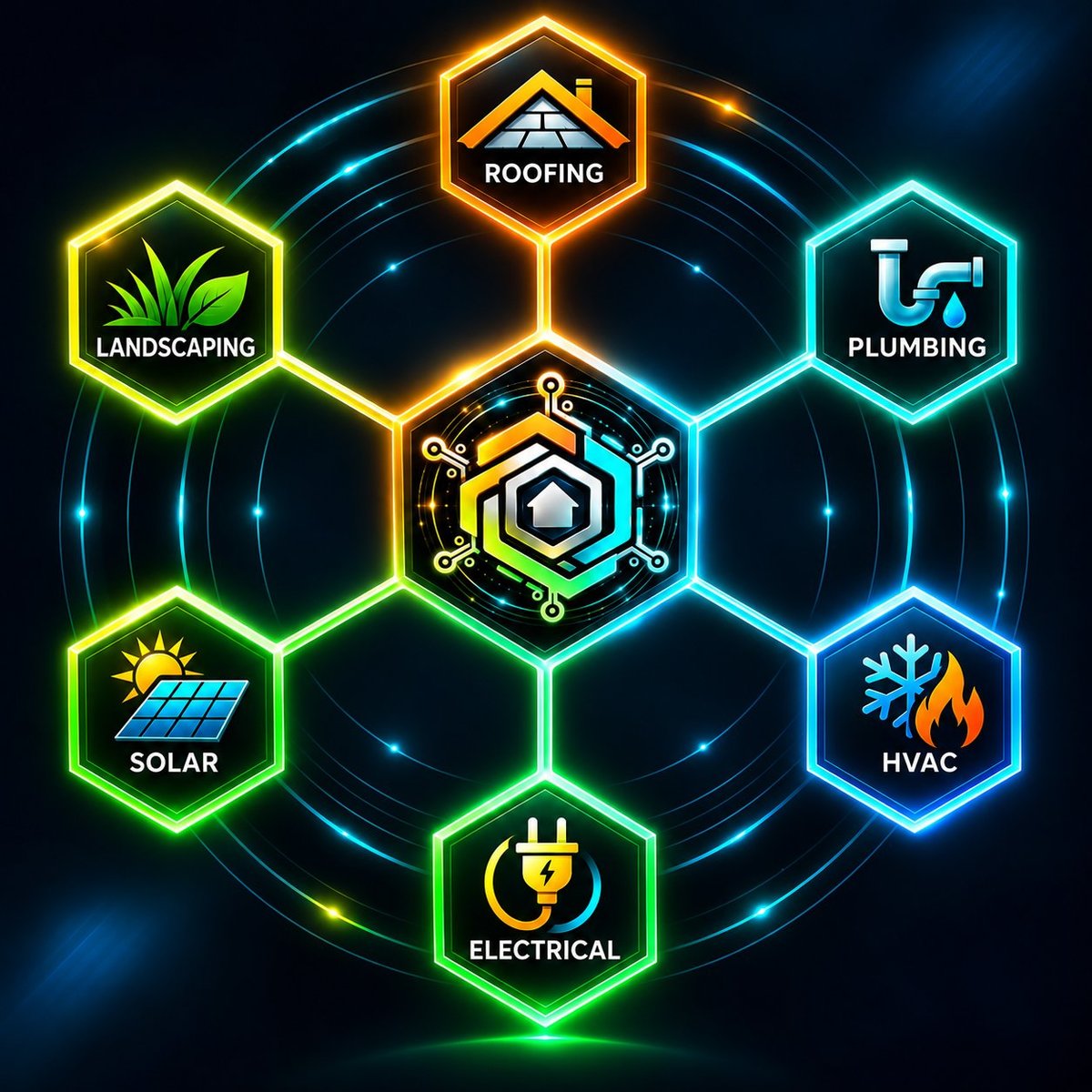
A roofing company may already know homeowners who need solar installation, landscaping, plumbing, or HVAC services. Home Hive 360 helps complementary businesses collaborate so relevant opportunities can be introduced to trusted partners — through the customers already in the network.
To grow, the only lever left is to buy still more leads at still higher cost.
The same marketing spend can reach further, because other Hive members can surface the opportunity to their customer base too.
Additional opportunities depend on customer interest, appropriate permissions, qualification, and partner availability. Not every lead qualifies for every category, and not every homeowner opts in.
Don't just generate more leads. Create more value from the opportunities you already generate.
Tap any step to see how it works in practice. The business model comes first — the technology exists to run it.
A Hive consists of approximately 5 to 20 complementary home service businesses. Only one business from each competing service category may participate in a given Hive — so a member never shares their leads with a direct competitor down the road.
Industry exclusivity
One roofing company, one plumber, one HVAC contractor, one electrician, one landscaper, one solar installer — and so on.
Partner approval
You review and approve each business before it joins your Hive. You are always in control of who you are associated with.
The value is a trusted local network. Each member's reputation is tied to the others', which is exactly why approval and exclusivity matter.
Members contribute eligible lead or customer opportunities generated through their existing business activities. Lead information may enter the system through CRM connections, website forms, and approved uploads.
Existing customer record
Someone already in your CRM — not automatically shared.
Shared lead
An eligible record contributed to the Hive ecosystem.
Qualified prospect
Expressed real interest in a partner's specific service.
Booked appointment
The furthest stage — a real conversation on the calendar.
Customer information must be handled according to applicable consent and privacy requirements. Records are only used for channels and purposes the customer has permitted.
The platform uses a contribution-based 1:1 exchange concept. Members contribute opportunities in order to participate in the network's shared lead ecosystem. Participation is tied to contribution — you don't simply receive.
businesses in the example Hive
eligible leads contributed by each
total contributed records in the pool
500 contributed records is not 500 qualified leads delivered to each member. It describes the size of the shared opportunity pool, not a guaranteed delivery. Contribution balance, eligible exposure, actual referrals, and conversion outcomes are four different things.
Once eligible opportunities are in the Hive, the platform coordinates relevant partner marketing across email campaigns, SMS campaigns, co-branded landing pages, AI-powered follow-up, lead qualification, referral routing, appointment scheduling, and performance tracking.
Email campaigns
Partner introductions to eligible customer lists.
SMS campaigns
Short follow-ups for customers with messaging consent.
Co-branded pages
Shared landing pages featuring the Hive's members.
AI follow-up
Automated qualification and response handling.
Campaigns and outreach operate only through configured, authorized channels and eligible customer permissions. Automation is set up and governed by the members — it does not message anyone who hasn't agreed to be contacted.
Select an industry to see an example of the referral relationships it could form inside a Hive.

Example: Roofing
A homeowner replacing a roof is often considering solar at the same time, and may also need gutters, insulation, or landscaping restored afterwards. Those are relevant, non-competing introductions.
Example: HVAC
An HVAC replacement often coincides with electrical panel capacity questions, duct or insulation work, and sometimes a roof or solar decision made at the same time.
Example: Plumbing
A significant plumbing repair can lead to drywall, flooring, mold remediation, or landscape drainage work — all handled by different trades.
Example: Electrical
Panel upgrades and rewiring often pair with HVAC installation, EV charger additions, solar, and remodeling work.
Example: Landscaping
Hardscaping, patios, and outdoor lighting projects frequently need electrical work, drainage and plumbing, and fencing or roofing repairs.
Example: Solar
Before panels go up, the roof condition matters, the electrical panel must be capable, and efficiency upgrades often come first.
A homeowner may be a potential customer for several non-competing service providers. Actual referrals depend on relevance and customer permission — not every lead is automatically valuable to every member.
Six connected modules sit behind the Hive model. Select a module to see what it does — and why it matters to your business.
See everything that matters in one place. Track leads, monitor partner performance, view revenue attribution, and get AI-assisted insights from a single command center.
Why it matters: you stop assembling spreadsheets from three systems to answer one question — where did this month's business actually come from?
Leads
1,247
Referrals
48
Sample interface showing layout only. Figures are not real customer results.
Never let another lead go cold. The lead management system captures, qualifies, routes, and tracks every opportunity — including partner referrals.
Why it matters: a referral that sits unopened for two days is worth far less than one answered in five minutes. The platform keeps ownership and follow-up status visible so nothing quietly dies.
Lead capture
From CRM, web forms, and partner referrals.
Qualification
Service type, location, budget, urgency.
Service-based routing
Sent to the best-fit member for that category.
Interaction history
Every touchpoint kept in one timeline.
Pipeline tracking
Stage-by-stage visibility from new to closed.
Follow-up status
Know what is waiting on you and what is waiting on them.
Ownership & assignment
Assigned to a person, not a shared inbox.
Manage your entire partner ecosystem from one place. View performance, approve new members, and coordinate referrals seamlessly.
Why it matters: your reputation travels with your partners' work. Approval controls and industry exclusivity are what keep the network worth being in.
Member directory
Profiles, services, and contact details for every member.
Industry exclusivity
One business per competing category.
Partner approvals
Review each request before it joins your Hive.
Performance reporting
See which partners actually drive value.
Contribution tracking
What each member has put into the pool.
Referral activity
Who referred whom, and when.
Partner profiles
What each business does, in plain language.
Personalized email sequences, SMS follow-up, co-branded landing pages, and AI voice agents that qualify leads and book appointments.
Why it matters: most contractors don't lose referrals to competitors — they lose them to silence. Automation closes the gap between interest and a returned phone call.
Automated email
Sequenced partner introductions and reminders.
SMS follow-up
Two-way messaging with consent managed.
Landing pages
Co-branded, mobile-optimized conversion pages.
AI voice agents
Answer questions and qualify over the phone.
Engagement workflows
Multi-step journeys triggered by customer behaviour.
Appointment scheduling
Booked onto the right member's calendar.
Campaign performance
Open, response, and conversion reporting.
Connect the tools you already use so lead and contact data keeps flowing in both directions — without manual re-entry.
Why it matters: you should not have to abandon the system your team already runs the business on. Your CRM stays your CRM.
2-way sync
Leads, contacts, and deal status stay aligned.
Lead-status updates
Changes reflected quickly — no manual exports.
Custom field mapping
Map fields to match your configuration.
Integration availability and depth vary by provider and by plan. Contact us to confirm the current status of a specific CRM before you commit to a migration or rollout.
Coordinate with Hive members, manage customer conversations, and keep everyone aligned — email, SMS, and partner messages in one place.
Why it matters: when a customer replies to a partner introduction, someone has to own that reply. A unified inbox makes that obvious instead of leaving it to chance.
Unified inbox
Every channel in one queue.
Partner messaging
Coordinate without leaving the platform.
Smart notifications
Alerts for what matters, not everything.
Team collaboration
Assign, hand off, and stay aligned.
Customer communications
Email and SMS threads tied to the right lead.
Internal notes
Context that stays with the opportunity.
Activity tracking
Who touched it, and when.
An illustrative example. Use the controls to walk the journey stage by stage.
A homeowner calls about a failing air conditioner. That is the original service opportunity — the one the contractor already earned through their own marketing.
Illustrative example only. Not every captured lead progresses through every stage — some stop at eligibility, some never respond, and some simply aren't interested. The platform tracks where each opportunity actually ends up.
Here's the full lifecycle of one co-branded campaign — from setup through attribution. Select a stage to follow it.
A member chooses which of their approved partners to feature, what the offer is, and which audiences are appropriate. Nothing is pre-scheduled on your behalf — you configure the campaign.
Automation is powerful, but it only runs on the parameters and brands you have explicitly approved.
Only partners who have been approved into the Hive can be promoted. Each partner's brand assets, service description, and offer wording come from their own profile.
This is the control that keeps your brand from appearing alongside a business you wouldn't recommend.
Audiences are built from eligible contacts, and consent status is checked before any message is queued. Customers who have opted out of marketing, or who haven't consented to SMS, are excluded.
Consent is a gate, not a checkbox at the end. If someone isn't eligible, the campaign skips them.
Personalized email sequences introduce the partner's service, with send timing optimized and sequencing that stops the moment a customer responds or books.
Nobody wants a fourth email about a service they already booked. Sequences respond to behaviour.
Timely text follow-ups for customers who have consented to messaging — two-way, so a reply goes somewhere a human can see it.
SMS is the highest-response channel and the most regulated. It only runs on documented consent.
AI agents and voice assistants answer common questions, capture the details that matter, and qualify interest — then hand the conversation to a person when it gets specific.
The goal isn't to replace your team. It's to stop losing opportunities that arrive after hours.
Co-branded, mobile-optimized landing pages convert interest into a form submission or a call. Each page carries conversion tracking so you can see what actually produced the lead.
Co-branding means the customer sees their trusted contractor's name beside the partner's — which is the whole point.
Interested prospects book onto the relevant member's calendar — the right business, the right service, the right availability.
A booked appointment is the first point where a shared lead becomes something you can actually count.
The platform tracks who referred whom and attributes resulting revenue back to the source — no manual spreadsheet reconciliation.
Attribution is what makes the fair-exchange model verifiable rather than a matter of trust.
Adjust the assumptions below to see how a shared opportunity pool could scale. Everything recalculates instantly.
Each row is a different quantity. They are not interchangeable.
These are illustrative estimates based on the assumptions you chose — not forecasts, promises, or representative results. Potential matches are not sales. Revenue figures assume every converted customer completes a job at the average value entered, which will not always be the case. Actual outcomes depend on your market, your follow-up, customer consent, and partner availability.
Reporting that answers the only question that matters: which relationships actually produce revenue?
Lead contributions
What you and each partner put into the pool.
Referral sources
Which partner produced each opportunity.
Partner performance
Value created, by partner, over time.
Response times
How fast referrals get answered.
Lead qualification
How many shared leads became real prospects.
Appointment activity
Booked, kept, and no-show rates.
Conversion rates
Stage by stage, not just one blended number.
Revenue attribution
Revenue traced back to its referring partner.
Campaign performance
Which campaigns earned attention and replies.
CRM synchronization
Confirmation your systems agree with each other.
Reporting & exports
Detailed exports for CRM or accounting sync.
Mobile access
The same numbers from the truck.
Attributed revenue
$127K
Active referrals
48
Conversion rate
34%
Hive members
12
Referral volume by month
Top performing partners
Sample interface. Company names and figures are placeholders used to demonstrate layout — they are not real customers or verified results.
Sharing customer information between businesses is a serious responsibility. Here's how we approach it — in plain terms.
Contact is limited to customers who have agreed to receive marketing, and to the channels they agreed to. No consent, no message.
Text messaging and automated calling carry specific consent, disclosure, and opt-out requirements. The platform is designed to support those requirements.
California residents have rights around access, deletion, and sale of personal information. Handling must respect those rights where they apply.
CRM connections use secure, authenticated integrations rather than shared credentials or manual file passing.
You decide which businesses can participate in your Hive. Data doesn't flow to a member you haven't approved.
Records can be reviewed, corrected, or removed, and only the fields relevant to a service match are used.
Opt-outs are honored and propagate. A customer who says stop stays stopped across the Hive.
Team members see what their role requires. Access is scoped rather than universal.
Home Hive 360 provides tools designed to support responsible data handling. It does not make your business automatically compliant with any law. Compliance also depends on how the platform is configured, what consent you have actually collected, how your team communicates with customers, and the laws that apply in your state and your customers' states.
If you are unsure what your obligations are, talk to a qualified professional. We would rather you ask than assume.
Reach relevant prospects through complementary business relationships instead of only through paid acquisition.
Create potential value from customer relationships that go beyond a single service category — the leads you already paid for.
Coordinate marketing and follow-up through connected workflows rather than texts, spreadsheets, and favors.
Collaborate with approved, non-competing professionals — never a random lead broker selling the same name to five companies.
Understand contributions, referrals, and network performance — the exchange is visible, not implied.
Monitor activity, conversions, and attributed revenue so you can tell which relationships earn their place.
Members have previously been able to earn membership credit by referring new businesses into the network. Incentive terms can change — contact us for the current program details before assuming any specific reward.
Connect with complementary home service businesses, create more value from existing lead activity, and build a network designed around collaboration instead of competition.